
DIY Local SEO Training Guide
Inspiring business owners & supporting through experience
Google Business Profile
Free traffic, grow easy and fast!
Bright Local Boost
Spread your information
Generate more business
Grow and make money
you can do it yourself!
Drive business and acheive your goals
I show you exactly what I do for SEO clients to drive free traffic continuously. What we’ll cover:
Your online file
Ai tools & tips
Google Maps Profile
Competition
Bright Local + Future
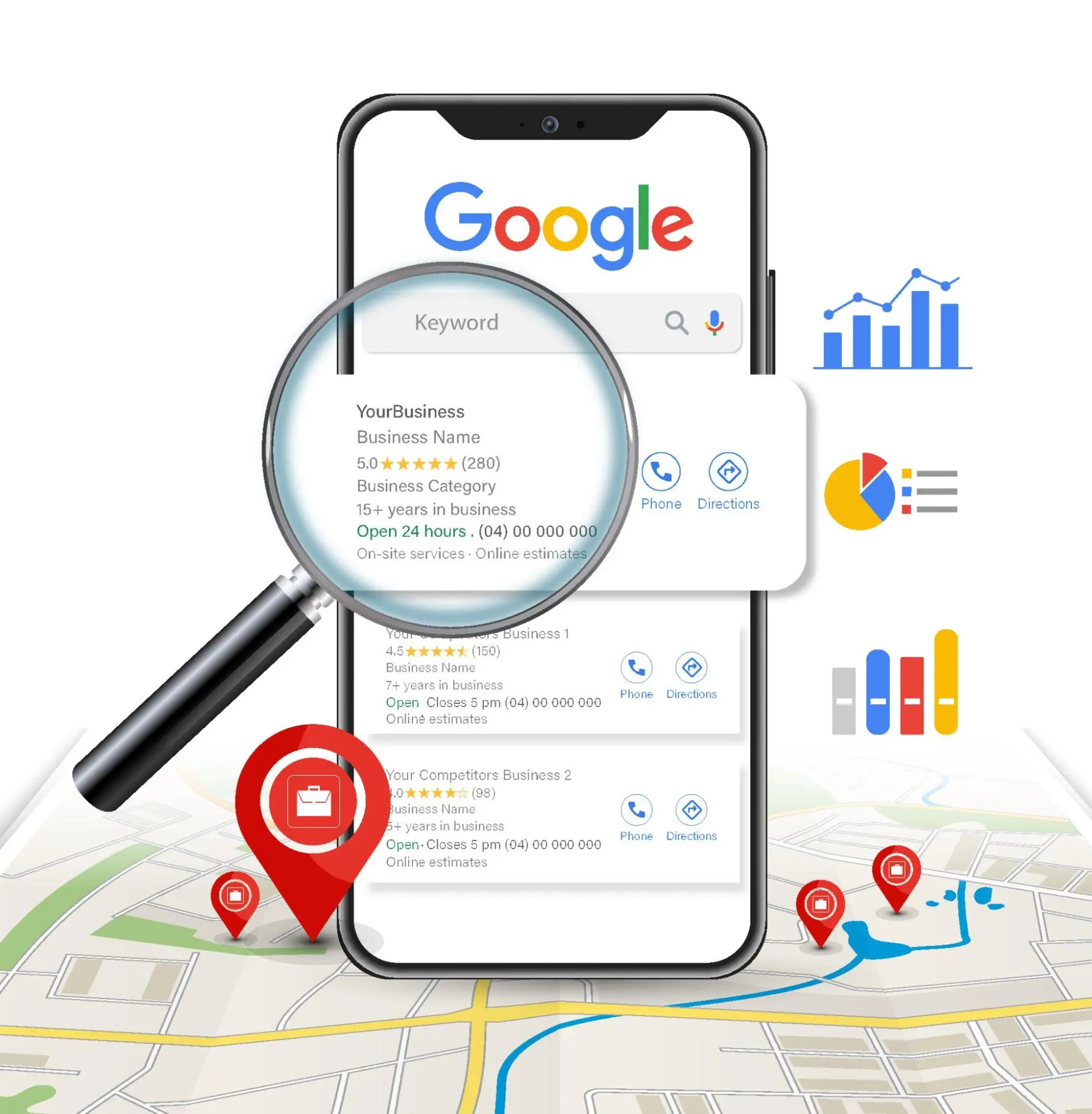
This free training guide walks you through exactly what professional SEO strategists do to rank local businesses higher on Google. You’ll learn how to optimize your Google Business Profile, use AI for keyword research, build your citation footprint with Bright Local, about other SEO tools, and understand the three core factors Google uses to rank local businesses. Whether you’re a plumber, retailer, or service provider, these are the same proven steps used for paying clients. Watch the video, follow along, and start driving free, consistent traffic to your business within months. Please share this page, it can help every local small business owner at any stage of business. Used Heygen for first videos. In the process of recreating. Videos are tricky business.
Or
$499
Competitive SEO (Only)
Video: Tips, tricks and strategies. Many small businesses don’t need.
$799
WordPress Website
Order, survey, audit, launch, payment, hosting setup, ownership, you maintain.
$299 down / $899 launch
Hi,
In this video, I will show you exactly how all SEO strategists and agencies enhance their high ranking Local SEO clients, including me.
The easiest way to understand Google in general is to think of your business online as a file. Basically, everything in our overall digital system is linked beyond what you would think. From government entities, communication networks, systems, internet, etc. When you create a business at your states corporation commission and buy a domain, a file is created and linked to your personal file. Everything online Googlebots can find about your business is added to that file and crosschecked with entities like the phone networks for verification. Google’s algorithm then compares that file to your competitors. Think of the Google algorithm like the index of a general book meets popularity contest.
Using AI for Keyword Research
I will go into detail about all of this starting with a tool that will help you immensely — AI.
You want to use AI, like Gemini, Grok, Claude or ChatGPT, for your initial keyword research and content creation. Google’s Gemini, for example, ballparks historical data and web-scale patterns for top and converting keywords. You could also use the Google Ads Keyword Planner, which provides specific monthly averages on live bidding data, or Google Trends for comparing keyword time spans.To go even deeper, use SEO platforms like SEObility, SEMRush, Ahrefs and MOZ. These platforms have richer SEO-focused metrics and very in-depth tools. Though to keep it quick and simple, the larger AI platforms will be close to other options, especially for the top searched keywords and industry terms.
With AI, it is important to be very specific about what you’re asking so you get the correct answer. For today’s purpose, we are first looking for the primary keywords people are using to search for your specific local business.
We’ll use the plumbing industry as an example, so you would want to phrase it something like:
“Please list for me the top 10 keywords, Google searched, in order of relevance, used to find a Phoenix, AZ plumber. Also list all relevant general words used in the plumbing industry.”
I always say please so robots are hopefully nice in the future — but I usually forget thank you.
You can phrase your request many different ways, but now you can see the keywords and general words you want to use when describing your business in a profile description or on your website. If you don’t get the answer you’re looking for, simply rephrase the request.
You will also use AI to help you write content for these areas. But you don’t necessarily need to use all of the words or overuse any of them, such as the city name. Focus on the primary keywords in order of relevance. In your Google profile description you have 750 characters, and you want to get as close to that as possible. For example:
“As close to 750 characters, please write a friendly Google Business Profile description, SEO optimized for performance, using these keywords: plumber phoenix az, emergency plumber, plumber near me, 24/7 plumber, plumbing services, water heater, leaks and drain cleaning. Humanize and make sure it is unique.”
Make sure to add your personal touches.
Now Google knows exactly what search queries you want to pull up for. Many people think that the algorithm would automatically know this, similar to common sense, but it does not. You need to tell it in many ways and as clearly as possible. You also want to use these words in the content and metadata of your website.
For example, if you have one location you could use “Plumber Phoenix AZ” as the primary keyword for your website home page. You would place it in the content and metadata. You could also place other industry words in the content. Then you would make an additional page to target a different well searched keyword, such as “Emergency Plumber Services.”
The 3 Primary Google Ranking Factors
There are 3 primary factors Google will consider while comparing and placing your local business:
1. Relevance: Does your business match or align with what the person is searching for? Your Google Business Profile’s category, description, and services should reflect or match what potential customers are actually typing into search.
2. Distance or Proximity: How close is your business to the searcher’s exact location or the location described in the search query? The nearer you are to someone’s location, the better your chances of showing up. What you’re learning in this video is how to pull up higher from farther away.
3. Prominence or Popularity: How well-known and trusted is your business? This includes the quality and quantity of your reviews, citations, backlinks and overall online presence. Also how consistently your business details — name, address and phone number (NAP) — appear across the web.
Data Aggregators & Citations
Two important terms are data aggregator and citation.
A data aggregator is a service that collects, verifies, and distributes your business information — Name, Address, Phone number (NAP) — to numerous online directories, GPS mapping services, and search engines.
A citation is any online mention of your business’s NAP, acting as a digital footprint that verifies legitimacy, especially when verified like you did with your Google Business Profile. Think of a citation as having your NAP on a piece of paper that is then added to your file.
These are crucial for your Local SEO footprint and will help you immensely. We’ll discuss these further when we get to Bright Local, a distribution service covering both terms.
One thing to remember is that your business name, address and phone number are extremely important, and you want them to be the exact same on every single platform online. Make sure you have it exactly how you want it on Google Business Profile before moving on to other placement.
Google Business Profile — Key Details
Now we’ll look at the details of your Google Business Profile. You want to fully fill in every single thing that pertains to your business. Most things are self explanatory, so we’ll only cover the important details.
Categories: For the category area, you want to put your primary industry. Although some people use this area for category or keyword stuffing, I would not. Only add another category or two if it makes sense to your business, such as an auto repair shop with a parts counter, or a hotel with a restaurant. Accuracy and details matter a great deal to the Google Maps algorithm.
Social Accounts: Also create accounts with social media sites and add them to your Google profile. We’ll cover that in a bit, so you’ll want to double back and add them once created. They double as citations for your overall footprint. You’ll also add them to Bright Local so they end up on most all citations. The more hooks you have in the water, the more fish you will catch.
Service Based Businesses: For service based businesses, you want to add each city you service, but be realistic. Also don’t overlook the “More” section — fill in everything that makes sense for your business.
Reviews: Reviews have become more and more important, especially in competitive industries. However, they help your overall image and presence, so it is best to focus on them. Many use costly but effective services such as Birdeye, Truereview or Vivant. A free way to do it is to select Reviews in your account, then “Get more reviews.” You can place your review link in areas of your website, social posts, email campaigns, or you can generate a QR code for print and digital placement.
Photos: Photos play a huge role as well. Make sure to add as many as you can, inside your location and out. If you’re a service based business, pictures are crucial to express your industry and craft as creatively as possible. A pro tip is to re-label your photos with keywords, industry words and/or short searchable descriptions before uploading to Google and other platforms.
Google Posts: Google posts are another tool that can be used for more exposure. I would try to publish a post once a week or month. Make sure it is complete and useful for your customers. AI can come up with many posts with the correct requests, especially for certain industries. A flower shop can do a different flower post about a flower type, but also groups of flowers, ultimately educating or informing customers.
Products & Services: Your products can also be added to your profile. Some ecommerce plugins such as WooCommerce can auto connect. You want to fill out as completely as possible, adding keywords and industry words, however you don’t want to ever overdo it. Add what makes sense for that product.
Same with services. You don’t want to keyword stuff here — simply add the primary services you offer, but you can be detailed. For example, a plumbing company might put Drain Services, Fixture Services, Water Heater Services, Pipe Services, and Water Quality. Notice they are all category headers with several subcategories, such as Drain Cleaning, Hydro Jetting, Drain Camera Inspection and Sewer Line Repair, which would all go under Drain Services. The more detailed you get, the more clear it is for Google to place you.
Understanding Google’s Algorithms
Google is the same as us. They are simply a business who aims to give us the most accurate results as possible to the search queries we requested. We need to do the same by filling everything we can online to inform our customers or clients, while using as many detailed words as possible to direct and inform the Google algorithms.
It can also be helpful to know that there are 3 separate algorithms — Google Maps, Reviews and Search — which all seamlessly interact, though are individually important and wise to focus on each. Two of them are covered here by focusing on your Local SEO strategy, though the Search algorithm is targeting Organic SEO with your overall website and off-site strategy. You can learn more about website SEO and Organic SEO by watching my website SEO video. The information can apply to any type of website. Once you know, you know — and you’ll grow.
Social Media Accounts
Before moving forward, it is wise to create social media accounts for your business on all major platforms listed in your Google Profile — even more will only help you. You can add them in your Google Business Profile as well as in Bright Local to be shared on your citation submissions. You do not need to be very active on social media overall, but it can help you and it’s free. Platforms like 99 Social can post for you many times per month. They can even do videos, blog posts and email marketing for you.
People have begun viewing social accounts like reviews, to judge the overall quality of your presence. For the DIYers, there are helpful platforms for connecting all social accounts and posting information from one hub, such as Buffer, Post Planner, Hopper and Sprout Social.
Researching Your Competition
Spend some time reviewing your market and competition. In fact, it’s the first thing I do when I begin working with a client. I research their local market heavily, then I search other cities to get a greater sense of the industry for ideas.
A way to judge your competition is to search for them the exact same way as if you were searching for yourself. How many have put effort into their presence, such as a website, social media and other types of content? Judge by placement and quality. Or you can use platforms like SEMRush, Ahrefs and MOZ to do more extensive research on your competitors.
Bright Local
Onto Bright Local, which is a distribution service and management hub allowing you to add your business information to data aggregators — which are networks — and citation platforms, which are added to your file. Both help your relevance and prominence immensely.
It is free to join, then subscribe for tools, or you can simply buy submissions and even break them up over time. Do some now and some later, especially if you’re in a non-competitive industry where many don’t know what you now know. You can even see the list and maximize your savings by adding your business information individually yourself.
A subscription connects your Google Posts, Google Reviews, Google Maps and Google Analytics accounts for easy management in one hub. If you take the information I’m sharing with you and start a business offering these services versus just showing them, they have monthly reports and a white label option for your own branding.
Local Search Grids:
One of the most powerful aspects of the platform and my personal favorite is the Local Search Grids for brick and mortar businesses. You can create them regularly showing your growth and progress by purchasing credits, though some come with a monthly subscription. They have helpful videos that show you how to set up.
The primary goal with Google Maps is to pull up in the top three as far away from your business as possible. These grids show your placement, hierarchy and competition on a map. They’re incredible for DIY business owners and resellers. Local Dominator and Local Viking are other platforms with similar features, though I’ve always liked Bright Local.
Overall, these platforms are absolutely worth every penny, especially the submissions, because it helps grow your business and presence overall. You should seriously consider them unless you’re in a non-competitive area. To further save, you can do what I’ve shown you for your Google Profile and social, then focus on your website and visit this last option down the road.
Setting Up Bright Local — Step by Step
Once you create an account at Bright Local, you will want to add a new location. They will first walk you through the Google profile auto connect or manual setup. Then you want to fill out your business’s core information thoroughly and accurately. Use your Google Maps profile as an exact guide.
They will ask you if you’re a service based business — if so, they will hide your address when needed, and you will be limited when submitting to certain platforms. Keep in mind that other than larger platforms like Yelp, citations are primarily for your Google business file and performance, not for driving traffic. So consider adding your address even if you’re a service based business.
For the description area, have your AI rewrite your Google description uniquely, the same 750 characters. Do not put the exact same content in the description. Rule of thumb overall online — you never want to duplicate content, especially on your website. However, citations are a bit different as this information will be duplicated on many platforms. Most SEOs will leave this, however if you want to go to the extreme, once your citation campaigns are finished you can log in to each individually and put a unique description on the ones that have one. Not all will.
Add your logo and pictures, labeled with your top keywords, before upload. Add your extra categories if you have them. Most platforms will accept your primary category already filled out above. Here you can be a bit more loose with what secondary categories and subcategories you put, because some platforms label things differently, so add whatever categories can make sense. Lastly, add your social media links.
Important: Before moving on, it is very important that your core information is complete and finalized before you start purchasing aggregator and citation submissions. Once you launch your campaigns, you may have a few days to request an alteration by email. After that it’s permanent and you will need to repurchase and run new campaigns. Also check your email — if you made a mistake, they may catch it and will reach out before they begin. They are very good about that.
Aggregators & Citations: At this point you can subscribe and easily connect all other Google accounts and set up tools such as keyword tracking, or bypass straight to the aggregators and citations. The aggregators are very important and will share your information to other platforms like Data Axle, Neustar and GPS Network. The citations, like Apple Maps, Yelp and Manta, are equally as important. Though depending on what you found while reviewing your competition, you can start with a few and add more later if you want. The more quality citations the better, especially in competitive markets.
If you set up the citation tracker and found citations that are wrong or duplicate, you can have them attempt to replace or remove them. You also want to uncheck any citations that you already have. When your citation submissions are complete after a few weeks, you want to revisit so you can verify Apple Maps, Yelp, EzLocal, Hub and Cylex, if you selected them. It’s a similar verification process as your Google Maps Profile. Bright Local will provide any credentials you may need — look for a button labeled “Citation Login Credentials.”
Final Notes
Everything I’ve shown you will absolutely without a doubt gain you more customers or clients in roughly two to six months, depending on competition. From here, I would focus on your website SEO. Hopefully my other video will help you with your current website.
Please see other free resources I have on my website, also partners like the AI Virtual Call Team, specially created for service businesses. They are all meant to help you build your business effectively and efficiently.
The difference between me doing your local SEO or you is that I do everything I’m showing you, with extra focus on citations, backlinks, all aspects of your website from technical to content, as well as off-website, organic and AI search. These are especially important for competitive markets such as restaurants, legal and home services like plumbing, electrical and restoration.
Please reach out if you have any questions and share with any business owners you know. I wish you, your family, friends and colleagues the very best in life.
Take care.
